


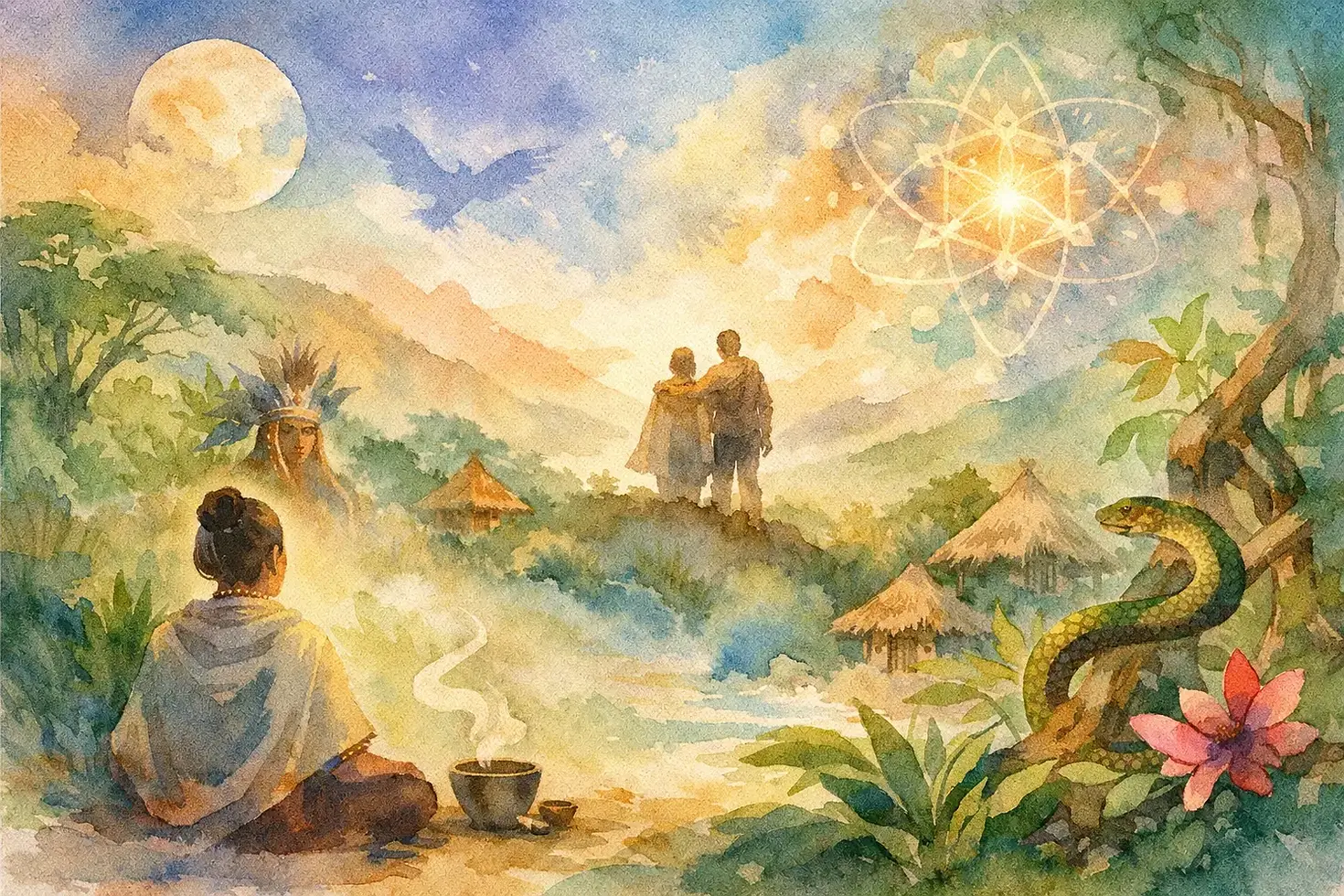
Ayahuasca Retreat With Integration Support
Some retreats promise a breakthrough. Far fewer are prepared to walk with you after the breakthrough changes everything. If you are seeking an ayahuasca retreat with integration support, you are likely not looking for spectacle or spiritual tourism. You are looking for a sacred container that can hold the full arc of transformation - preparation, ceremony, and the often humbling work of bringing revelation into daily life.
Ayahuasca can open profound states of remembrance, grief release, spiritual insight, and confrontation with patterns that have shaped a lifetime. What arises in ceremony is not always neat, poetic, or immediately clear. Some experiences feel luminous. Others feel disorienting before they become meaningful. This is why integration is not an extra service added for comfort. It is part of responsible care.
Why an ayahuasca retreat with integration support matters
A powerful ceremony can shift perception in a single night. Living that wisdom is slower. After retreat, old relationships still need tending. Your body still carries its history. Work, family, grief, addiction patterns, nervous system overwhelm, and spiritual sensitivity do not disappear because one ceremony was profound.
Without integration support, people often leave with beautiful insights but little structure for embodying them. They may struggle to make sense of visions, emotional releases, or unexpected changes in identity. They may feel opened but ungrounded. In some cases, they return home to environments that do not understand what they have experienced, which can deepen confusion or isolation.
A well-held retreat recognizes that ceremony is only one part of healing. Integration gives context to the medicine experience and helps translate spiritual revelation into practice. That may include trauma-conscious support, coaching, journaling guidance, community connection, spiritual mentorship, or follow-up sessions that help you discern what is truly being asked of you.
This matters even more for those entering ceremony with trauma history, major life transitions, depression, spiritual crisis, or long-standing emotional pain. In these cases, the medicine may illuminate the path, but integration helps your system walk it safely.
What real integration support should include
Not all integration is equal. Some retreat centers mention it briefly, then offer little beyond a group check-in or a generic suggestion to meditate at home. For serious seekers, that is not enough.
Meaningful integration begins before you arrive. Preparation helps you clarify intention, understand the ceremonial framework, assess readiness, and build trust with the facilitators. It can also help identify where extra support may be needed, especially if you are working through trauma, medication transitions, or a complicated emotional landscape.
During retreat, integration is supported through the quality of the container itself. Skilled facilitators do more than lead ceremony. They help participants orient to what is unfolding, maintain safety, and receive teachings in a way that honors both the spiritual and psychological dimensions of the work. This is especially important when a retreat is rooted in lineage and not reduced to a consumer experience.
After ceremony, support should become more specific. A strong program often includes follow-up calls, one-on-one guidance, structured reflection, and a way to stay connected to a community or mentor rather than being left alone with a life-altering experience. The best support does not force one interpretation onto your journey. It helps you listen more carefully to your own truth while staying grounded in wise counsel.
The difference between peak experience and true transformation
Many people are drawn to ayahuasca because they feel called to healing. Others come because they sense their life can no longer continue in the same shape. Both are valid. But transformation is not measured only by what happens in ceremony.
Sometimes a participant has vivid visions, cathartic release, and immediate clarity. Sometimes the medicine works more quietly, revealing what has been avoided and inviting a disciplined relationship with prayer, boundaries, grief, honesty, or service. The second path can be just as sacred, and often more enduring.
An ayahuasca retreat with integration support helps protect against a common misunderstanding: that intensity equals completion. It does not. A ceremony can be intense and still require months of gentle embodiment. It can feel subtle and still alter the course of a life.
Integration asks different questions than ceremony does. Not only what did you see, but what are you willing to change? Not only what did you feel, but what practices will help you remain in right relationship with that truth? Not only what was healed, but what must now be forgiven, released, or rebuilt?
How to discern whether a retreat is truly well held
For a spiritually mature audience, discernment matters as much as devotion. A retreat can use sacred language and still lack the structure needed to care for vulnerable human beings. When evaluating a program, look beyond the imagery and promises.
Ask how preparation is handled. Ask what medical and psychological screening is in place. Ask who leads the ceremonies, what lineage informs the work, and how participants are supported if difficult material arises. Ask what happens after the retreat ends. If integration consists only of a casual message or a one-time group share, that may not be sufficient for the depth of work being offered.
It also helps to notice whether the organization sees plant medicine as a stand-alone event or as part of a larger spiritual path. Retreats grounded in integrity tend to emphasize humility, responsibility, and continued practice. They understand that healing is relational. It unfolds through ceremony, mentorship, community, embodiment, and service.
This is where organizations like Pachamama Sacred Paths speak to a deeper need. The ceremonial work is not presented as a one-off escape from life, but as part of an ongoing path that includes preparation, integration, coaching, spiritual education, and community support.
Why lineage and trauma-conscious care belong together
There is sometimes a false divide between ancient ceremony and modern support. In truth, responsible retreat leadership honors both. Lineage offers spiritual depth, cosmology, prayer, and sacred orientation. Trauma-conscious care helps ensure that what opens in ceremony is met with skill rather than assumption.
For many participants, especially those carrying childhood wounds, relational trauma, or nervous system dysregulation, medicine work needs more than reverence. It needs pacing, consent, discernment, and aftercare. A facilitator should understand when to encourage surrender and when to support grounding. They should know that not every intense experience is spiritual advancement, and not every difficult moment should be romanticized.
A mature ayahuasca retreat with integration support respects the mystery without abandoning practical care. It creates room for devotion and structure to coexist.
What integration may look like after you return home
Coming home can be the most revealing part of the journey. The medicine has spoken, but now daily life answers back. You may feel more sensitive, more honest, and less willing to betray your own knowing. That can be liberating. It can also be disruptive.
Integration often includes very ordinary acts: resting more deeply, changing how you speak to your body, setting firmer boundaries, reducing overstimulation, revisiting relationships, or seeking continued counseling or coaching. Spiritual experiences need practical anchors. Otherwise, insight remains abstract.
It is also common for meaning to unfold in layers. What you thought the ceremony was about on day two may look very different six weeks later. This is why ongoing support matters. It helps you resist the pressure to define everything too quickly.
For some, integration leads toward renewed purpose. For others, it begins with tenderness, sobriety, and learning how to feel safe in their own life again. Neither path is lesser. The medicine meets each person differently, and the right support honors that difference.
Choosing the retreat that matches your readiness
The right retreat is not always the most intense, the most remote, or the most dramatic. It is the one that meets your level of readiness with integrity. Some people need a smaller group and more personal guidance. Others are prepared for a deeper ceremonial sequence because they already have strong spiritual practice and support structures in place.
This is where honesty becomes part of the medicine. If you know you are tender, depleted, or carrying unresolved trauma, choose a retreat that does not rush your process. If you are seeking initiation rather than inspiration alone, choose a path that offers continuity after the ceremony ends.
Sacred work deserves sacred follow-through. An ayahuasca retreat with integration support is not simply a better package. It is a more ethical and life-giving way to approach transformation. When ceremony is held with devotion, preparation, and wise aftercare, the experience has a greater chance of becoming not just memorable, but meaningful.
If you feel called to this path, listen not only for where the medicine is offered, but for where your healing will be tended once the songs are over.


Comments