


How to Choose Shamanic Retreats With Care
A retreat can be a threshold, not a vacation. When the call arrives through grief, spiritual disconnection, a life transition, or a desire to meet yourself more truthfully, it can be tempting to say yes to the first beautiful promise you see. Yet learning how to choose a shamanic retreat asks for the same discernment you would bring to any meaningful initiation: patience, clear questions, and reverence for the depth of the work.
The right retreat will not need to convince you that transformation is possible. It will show you how it intends to hold that possibility with care. Ceremony may open a door, but preparation, ethical leadership, integration, and community are what help you walk through it responsibly.
How to choose a shamanic retreat with discernment
Begin by asking what is truly calling you. Are you seeking support through a major transition? A deeper relationship with spirit? Healing around family patterns or unresolved emotions? Are you feeling drawn to plant medicine, traditional ceremony, ancestral wisdom, or a disciplined spiritual path?
There is no wrong reason to seek retreat, but clarity changes what kind of container will serve you. A person looking for rest and renewal may need something different from someone navigating complex trauma, longstanding depression, or a profound spiritual opening. A serious retreat organization should not treat every guest as though they have the same needs, readiness, or history.
Be cautious of programs that promise guaranteed healing, instant enlightenment, or a complete reinvention of your life in a few days. Sacred work is not a transaction. It can be beautiful, disruptive, humbling, and deeply clarifying, but it asks for participation long after the closing circle.
Look beyond the ceremony itself
Many retreat descriptions focus on the medicine, the location, or the number of ceremonies offered. These details matter, but they are not the whole picture. The more revealing question is: What happens before and after ceremony?
A well-held retreat should offer a clear preparation process. This may include an application, health and medication screening, orientation calls, dietary guidance where appropriate, intention-setting practices, and honest conversations about contraindications. Screening is not an obstacle to spiritual growth. It is an expression of sacred responsibility.
Ask how the organization evaluates readiness. If plant medicines or intense breathwork, fasting, body-based practices, or all-night ceremony are involved, the team should be able to explain who may need additional support, postponement, or a different path altogether. Responsible facilitators do not make medical promises, and they do not pressure someone to participate when the fit is unclear.
Integration deserves equal attention. Powerful experiences can bring insight, emotion, memory, grief, and new questions to the surface. Ask whether integration circles, one-on-one support, coaching, educational resources, or ongoing community are available after you return home. A retreat should not leave you alone with an experience that has changed the way you see your life.
Examine lineage, training, and cultural respect
The word “shamanic” is used broadly in modern wellness culture. It can refer to many different practices, traditions, and personal approaches. That makes it especially important to ask where the teachings come from and how they are being carried.
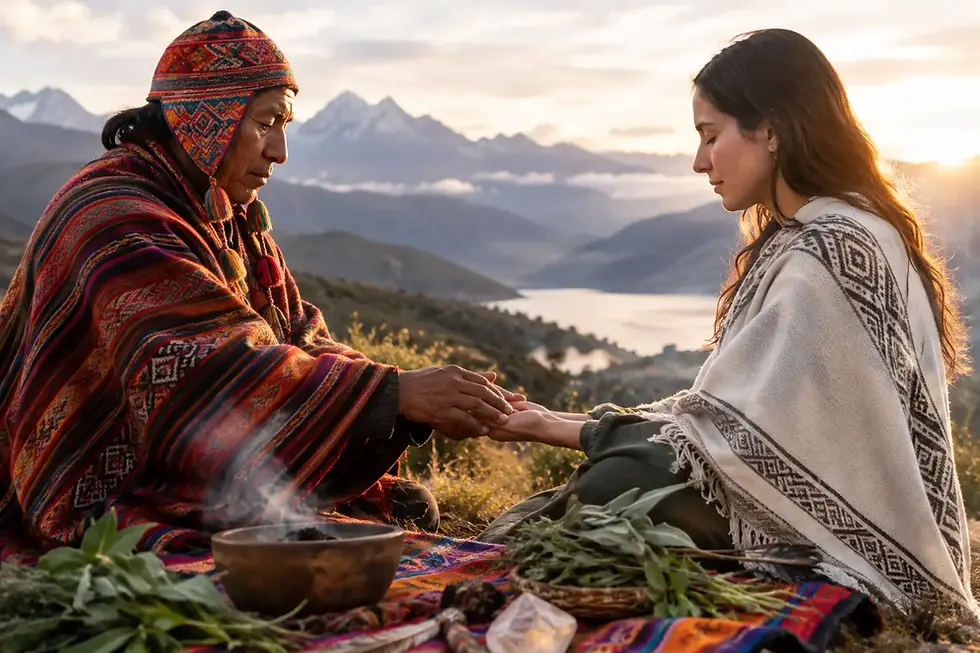
A trustworthy retreat should speak plainly about its lineage, teachers, and ceremonial influences. If an organization draws from Andean traditions, for example, it should be able to share how it relates to those teachings, who has guided its work, and how it honors the living communities from which those practices arise. Authenticity is not proven by exotic imagery, foreign words, or dramatic claims of spiritual authority. It is reflected in humility, accountability, relationship, and consistent practice.
Lineage alone does not automatically make a retreat safe, just as a polished website does not automatically make one unsafe. Look for the meeting point between traditional wisdom and present-day responsibility. Facilitators should understand the ceremonial context they are holding while also maintaining appropriate boundaries, consent practices, emergency planning, and trauma-conscious care.
You may also encounter retreats that blend traditions. This can be meaningful when it is done transparently and respectfully. A program that includes Andean cosmology alongside meditation, somatic practices, coaching, or other spiritual frameworks should be clear about what comes from where. Blending does not need to mean diluting, but it should never become a way to borrow sacred practices without honoring their roots.
Ask direct questions about safety and boundaries
Before making a financial commitment, request clear answers. You are not being difficult or unspiritual by asking practical questions. You are honoring your wellbeing.
Consider asking about the facilitator-to-participant ratio, the presence of trained support staff, emergency protocols, overnight supervision, and how confidentiality is protected. If ceremonies involve touch, ask exactly how consent is requested and respected. Touch should never be assumed in a vulnerable state, and participants should always be free to decline without judgment.
It is also wise to ask how the team handles challenging experiences. Do they have a grounded approach when someone becomes overwhelmed, frightened, physically unwell, or emotionally activated? Is there a process for raising concerns about staff behavior? Are boundaries around sexual contact, financial pressure, and teacher-student relationships stated clearly?
Pay attention not only to the answer, but to how it is delivered. Defensiveness, vagueness, or spiritual bypassing are meaningful signals. A mature organization can answer ordinary questions without implying that your caution reflects a lack of faith.
Consider the group and the setting
The environment shapes the work. A small group may offer more individual attention and intimacy, while a larger gathering can create a powerful sense of collective prayer and shared momentum. Neither is inherently better. The question is whether the group size matches the support available.
Location matters as well. Consider travel demands, altitude, weather, privacy, sleeping arrangements, food, accessibility, and the time you will need afterward to rest before returning to ordinary responsibilities. A pilgrimage in Peru or Bolivia may carry a different physical and spiritual intensity than a retreat closer to home in California or Mexico. Choose a setting that supports your capacity, not merely your imagination.
Read testimonials with discernment. Look beyond dramatic stories of visions or breakthroughs. The most meaningful reflections often mention feeling respected, prepared, safely challenged, and supported after the retreat. Notice whether past participants speak about the quality of the container, not only the intensity of the experience.
Let preparation reveal the integrity of the path
The way a retreat team communicates before you arrive tells you much about how they will hold you in ceremony. Are schedules, expectations, costs, cancellation policies, and participation requirements transparent? Are you invited into a conversation rather than rushed toward payment? Is there room to discuss your intentions and concerns with someone qualified to guide the process?
A spiritually grounded organization understands that devotion and discernment belong together. Pachamama Sacred Paths approaches ceremony as part of a longer relationship with healing, integration, and sacred community - not as a spectacle or a single dramatic event. That continuity is worth seeking wherever you choose to travel.
Finally, listen to the quiet wisdom beneath urgency. You do not have to attend the soonest retreat, take the strongest medicine, or choose the most remote destination to prove your commitment. Sometimes the right answer is yes. Sometimes it is not yet. Sometimes it is a different kind of support entirely.
Choose the retreat that makes you feel neither dazzled nor diminished, but respectfully met. The path of transformation asks for courage, and one form of courage is selecting a container that honors your humanity as deeply as it honors the sacred.


Comments