


What Is Spiritual Initiation? A Sacred Threshold
A spiritual initiation is not a spiritual experience you collect. It is a threshold that asks something real of you: greater honesty, deeper responsibility, and a willingness to let an old way of living come to an end. For those asking what is spiritual initiation, the simplest answer is this: it is a consciously held passage that marks a change in your relationship with yourself, Spirit, community, and the path you are called to serve.
In many sacred traditions, initiation is not awarded because someone is curious, charismatic, or ready for a new identity. It unfolds when a person has prepared to meet a teaching, responsibility, or level of awareness with humility. It may be marked through prayer, ceremony, pilgrimage, fasting, study, nature-based practice, or a commitment witnessed by elders and community. The outer form varies. The inner request remains consistent: become someone who can carry what has been revealed.
What Is Spiritual Initiation, Really?
The word initiation can sound dramatic, and sometimes it is. A genuine initiation may arrive during a major life passage: grief, illness, a relationship ending, a profound calling, or a season when the familiar self no longer fits. Yet hardship alone is not initiation. Pain becomes initiatory when it is met within a meaningful container, with reflection, ethical guidance, and a willingness to transform what has been learned into a new way of being.
Initiation differs from inspiration. Inspiration can move you for an afternoon. Initiation reorganizes your commitments. It may clarify what you can no longer abandon in yourself, what patterns must be released, or how you are being asked to show up for your family, work, ancestors, and community.
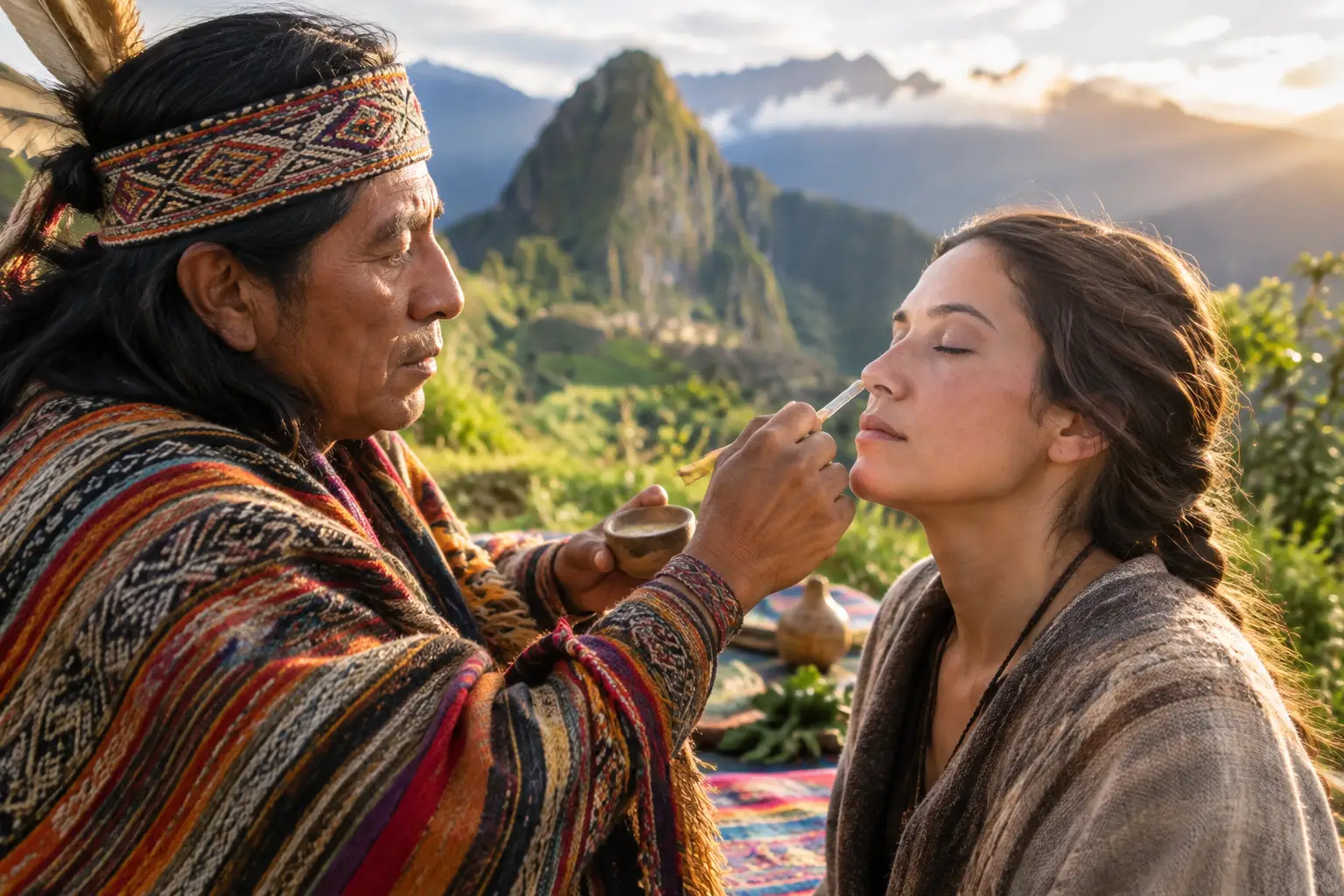
In Andean-informed spiritual practice, this is often understood as a living relationship rather than a private achievement. The mountains, the Earth, the elements, the unseen forces of life, and the human community are not merely symbols. They invite reciprocity. A person who receives a blessing, teaching, or sacred responsibility is also asked to give back through right relationship, prayerful action, service, and care for the web of life.
A Threshold, Not a Status Symbol
It is easy for modern spiritual culture to turn initiation into a badge. Someone may want a title, a lineage claim, a ceremonial role, or proof that they are more awakened than they were before. But authentic initiation tends to soften spiritual ego rather than decorate it.
A sacred threshold does not make a person superior. It makes them accountable. If you are initiated into a practice of healing, prayer, or service, the question is not whether others recognize your advancement. The question is whether your life becomes more aligned, compassionate, disciplined, and truthful.
This is why trustworthy traditions place care around initiation. Elders, teachers, and experienced facilitators may observe a student over time. They look not only for visionary capacity, but for emotional maturity, consent awareness, grounded decision-making, and the ability to respect boundaries. A person can have powerful experiences and still need substantial preparation before taking on sacred responsibility.
The Elements of a Meaningful Initiatory Process
There is no single ceremony that defines every spiritual initiation. Some are formal and lineage-specific. Others are quieter, unfolding over months of practice and mentorship. Still, a well-held process commonly includes several elements.
Preparation Creates the Container
Preparation is an act of respect. It may include setting intentions, simplifying daily life, prayer, dietary guidance when appropriate, journaling, meeting with a guide, and tending to practical matters at home. It can also include assessing whether this is the right time for deep work.
For people carrying trauma, grief, or significant emotional distress, preparation should never be rushed. Spiritual work is not a substitute for qualified mental health care, medical care, or crisis support. A responsible spiritual container recognizes its limits and encourages participants to seek the right forms of care alongside ceremonial and devotional practice.
Preparation also asks a grounding question: What are you willing to change? Without that question, even a beautiful ceremony can become another intense memory rather than a doorway into embodied transformation.
Ceremony Makes the Passage Visible
Ceremony gives form to an inward crossing. Through prayer, sacred song, offerings, silence, ritual cleansing, meditation, or other tradition-specific practices, it gathers attention around a moment of commitment. It says: this matters, and it will be witnessed.
In some paths, sacred medicines may be part of a ceremonial process. They are not initiation by themselves, nor are they appropriate for everyone. Their use requires careful screening, experienced facilitation, informed consent, legal and cultural responsibility, and meaningful preparation and integration. No substance can confer the character, discernment, or discipline that a long path of practice requires.
The ceremony itself may be powerful, gentle, challenging, or unexpectedly ordinary. Measuring its value by visions alone can be misleading. Sometimes the deepest medicine is the clear recognition of a truth you have avoided, followed by the courage to live differently.
Witness and Mentorship Offer Protection
Initiation has traditionally been held in relationship because transformation can be difficult to interpret alone. A trusted mentor or mature community can help distinguish a sincere calling from urgency, escapism, or spiritual inflation. They can offer encouragement, but they can also ask the questions that protect both the seeker and the work.
Mentorship is not about surrendering your discernment. It is about developing it. Ethical guidance leaves room for your agency, honors your boundaries, and does not demand secrecy, dependence, or unquestioning loyalty. A teacher worthy of trust understands that sacred authority must be exercised with humility.
Integration Turns Revelation Into Practice
After an initiatory experience, life still asks for dishes to be washed, messages to be answered, and relationships to be tended. This is where integration begins. You may need to rest, write, speak with a trusted guide, adjust your routines, make amends, or sit with uncertainty before taking action.
Integration is not a final step that ends after a few days. It is the long practice of allowing insight to become behavior. If an initiation revealed a need for stronger boundaries, integration may mean having a difficult conversation. If it awakened devotion to service, it may mean making time for consistent study or volunteer work. If it opened grief, integration may mean receiving appropriate support rather than trying to transcend your feelings.
How to Recognize a Call to Initiation
A call to initiation often feels less like a demand for spectacle and more like a persistent inner invitation. You may feel drawn toward prayer, study, ceremony, pilgrimage, or a teacher whose work emphasizes responsibility over promises. You may also feel that an old identity is falling away before the next one is clear.
Discernment matters here. Not every intense desire is a spiritual call, and not every difficult season needs to become a ceremonial quest. Ask whether you are seeking to avoid your life or to meet it more fully. Notice whether the path invites patience, ethics, and practical grounding. Be cautious of anyone who guarantees enlightenment, pressures you to make a quick financial commitment, claims exclusive access to truth, or encourages you to cut off healthy support systems.
A sound path will make room for questions. It will be clear about expectations, scope of practice, safety policies, cultural context, and post-ceremony support. It will not treat vulnerability as a business opportunity or confuse intensity with integrity.
Initiation Is a Beginning
At Pachamama Sacred Paths, spiritual development is approached as a devotional relationship with healing, service, and ongoing integration, not a one-time event to consume. Ceremony may open a door, but the path is shaped by what follows: how you pray, how you care for your body, how you repair harm, how you listen, and how you participate in sacred community.
The most meaningful initiations often become visible over time. Months later, you may notice that you no longer betray your own inner knowing. You may respond to conflict with more presence, recognize ancestral patterns with greater compassion, or choose a life that reflects your deepest values. These changes can be quiet, but they are not small.
If you feel drawn toward an initiatory path, begin with reverence rather than urgency. Seek experienced, ethical support. Give yourself time to prepare. Let your questions mature. A true threshold does not require you to abandon your discernment. It invites you to bring your whole self, with courage and humility, into a more sacred way of living.


Comments