


Your Guide to Huachuma Ceremony Etiquette
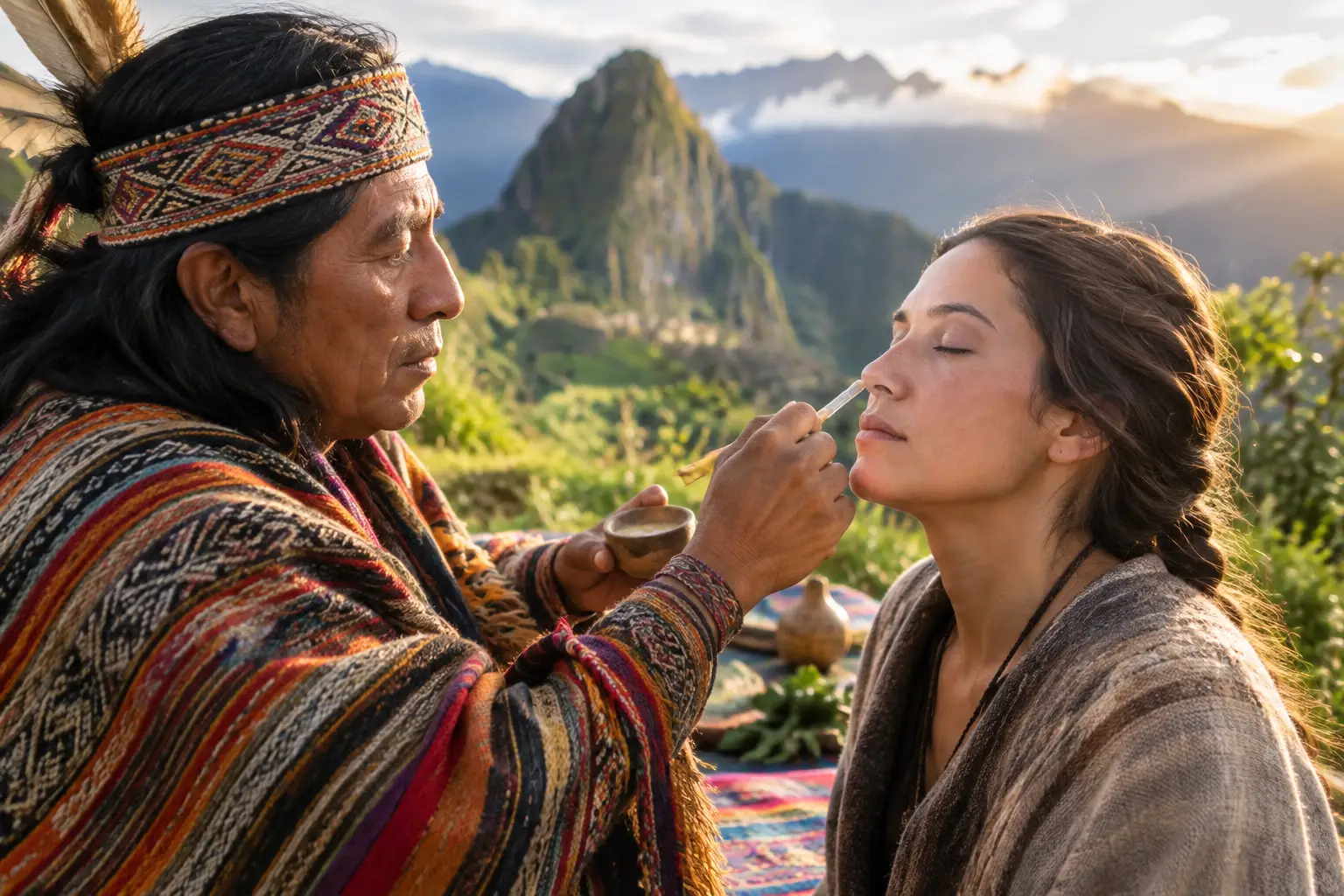
A Huachuma ceremony is not a night of entertainment, personal theater, or spiritual sightseeing. It is a meeting with a living mountain spirit, held inside a circle where every person carries responsibility. This guide to huachuma ceremony etiquette is for the seeker who is done feeding chaos and ready to stand in truth.
Huachuma, also known as San Pedro, carries the spirit of the Andes. Its path calls for humility, clean intention, and respect for the people beside you. You do not arrive to consume an experience. You arrive to be seen by the parts of yourself you have avoided.
The right path has become clear from the wrong. Ceremony etiquette keeps that path clear. It protects the prayer, honors the lineage, and helps the circle remain a place of order rather than confusion.
Huachuma Etiquette Begins With Your Intention
Your intention is not a wish list. It is not a demand placed before Spirit. Huachuma does not exist to prove that you are special, give you a grand story, or confirm the identity you already cling to. It meets you where you are, then shows you what stands between you and your own alignment.
Come with one honest prayer. It can be about grief, anger, fear, purpose, family, devotion, or the inner conflict that has followed you for years. Name what is true. Do not decorate it. A false prayer builds a false altar inside the heart.
Ask yourself what you are willing to release. Ask what pattern has ruled your life. Ask where you have chosen comfort over truth. These questions are not meant to make you feel small. They are meant to return you to your own authority.
God does not change the condition of a people until they change what is within themselves. This is the law of the path. You cannot ask for a new life while protecting every old attachment that keeps you bound.
Respect the Ceremony as a Shared Field
A Huachuma circle is not built around one person. Your experience matters, but it is held alongside the prayers of everyone present. Each person has arrived carrying their own story, their own ancestors, their own burden, and their own call toward a cleaner life.
That is why respect is not optional. Your words, movement, attention, and choices affect the field. When you enter with reverence, you help create order. When you arrive distracted, demanding, or careless, you bring noise into a space that asks for listening.
Do not compare your journey to another person's journey. One person may sit quietly. Another may cry, pray, laugh, or meet deep grief. Huachuma works in its own language. There is no prize for having the loudest vision or the most dramatic story.
Keep your focus on your own prayer. Do not stare at others, interrupt their process, offer unwanted counsel, or turn their vulnerability into a conversation. What someone reveals in ceremony belongs to them. Respect their silence as fully as you respect their words.
The Facilitator Holds a Role, Not a Performance
A true ceremonial leader is not there to entertain you or make you dependent. Their role is to hold the container, tend the spiritual order, and guide the group according to the traditions they serve. Respect for the facilitator means listening when direction is given and not creating your own ceremony within the ceremony.
Do not test boundaries to see whether they matter. Do not bring arguments, spiritual pride, or a need to be the exception. He that is not with me is against me. In ceremony, this means choosing clearly: Will you serve the prayer, or will you serve the part of yourself that wants control?
At Pachamama Sacred Paths, ceremony is held as a disciplined path of devotion, not a casual gathering. The work asks for your presence before, during, and after the circle. That level of commitment is not harsh. It is mercy for the soul that is ready to stop wandering.
Guide to Huachuma Ceremony Etiquette During the Circle
Silence has power. It gives Huachuma room to speak. It gives others room to feel what is moving through them. Words can be medicine when they are called for, but unnecessary talking pulls energy outward and breaks concentration.
Honor the songs, prayers, offerings, and moments of stillness. These are not decorations around the main event. They are part of the ceremonial language. The mountain does not need to compete for your attention. You are the one being asked to become quiet enough to hear.
If emotion rises, let it be honest. Tears are not weakness. Fear is not failure. Anger is not proof that you are broken. What matters is whether you are willing to meet what rises without making it someone else's burden. You are responsible for your energy.
Do not touch another person unless there is clear permission and the ceremonial container allows it. Do not assume closeness because you shared a powerful night. A person can be open-hearted and still need space. Honor their boundary without question.
Be mindful with your body and your belongings. Keep the space orderly. Follow the agreements of the circle. A ceremony is not the place for photographs, messages, side conversations, or collecting proof that something mystical happened. The deepest work does not need an audience.
No man can serve two masters. You cannot give yourself to prayer while feeding distraction. Choose what you came for.
Humility Is the Doorway
Many seekers arrive with spiritual language but little humility. They know the names of medicines, teachers, chakras, and traditions. Yet knowledge without surrender becomes another mask. Huachuma sees through masks quickly.
Do not enter believing you already know what the night must bring. The mind loves a plan because a plan gives it the illusion of command. The spirit path asks more of you. It asks you to stand in the unknown without running back to old stories.
Humility also means honoring the Andean roots of Huachuma. This medicine comes from a land, a people, mountains, waters, prayers, and generations of relationship. It is not a trend to borrow when life feels empty. Treating it as a fashionable escape creates separation from the very wisdom you seek.
You are not asked to become someone else. You are asked to stop abandoning who you truly are. He that finds his life shall lose it. The identity built from approval, fear, money, image, and control cannot lead you home.
What You Carry After Ceremony Matters
The ceremony does not end when the circle closes. What is shown to you must be honored in the days that follow. A vision that changes nothing is only a story. A message that is never lived becomes another weight on the heart.
Do not rush to explain every detail to people who were not there. Some experiences need silence before they need language. Some truths need time to take root. Protect what was given to you from the hunger to be seen, praised, or understood.
You may feel tenderness toward life, clarity about a relationship, sorrow for a choice, or a strong call to change direction. Do not treat these movements lightly. They point toward the places where your soul has been asking you to become whole.
What shall it profit a man if he gains the whole world and loses his soul? This question does not exist to frighten you. It exists to wake you up. You know where you have traded your truth for comfort. You know where you have delayed the decision that keeps calling your name.
Integration is devotion made visible. It is the choice to let the ceremony place a demand on your life. Not every answer arrives at once, but the next honest step becomes clear when you stop bargaining with the old self.
Enter With Respect and Leave With Responsibility
Huachuma ceremony etiquette is simple because truth is simple. Come clean in your intention. Respect the lineage and the circle. Remain humble. Keep your attention on your own prayer. Honor boundaries. Carry the teaching into your life.
You yourselves must strive; the awakened ones only point the way. No facilitator, medicine, mountain, or teacher can walk your path for you. They can reveal the door. You must choose to enter.
If the chaos inside you has become too loud to ignore, do not keep feeding it with delay. Reach out and begin a conversation about a ceremonial path held with devotion, structure, and reverence. Your soul is not asking for another distraction. It is asking for your full yes.


Comments