


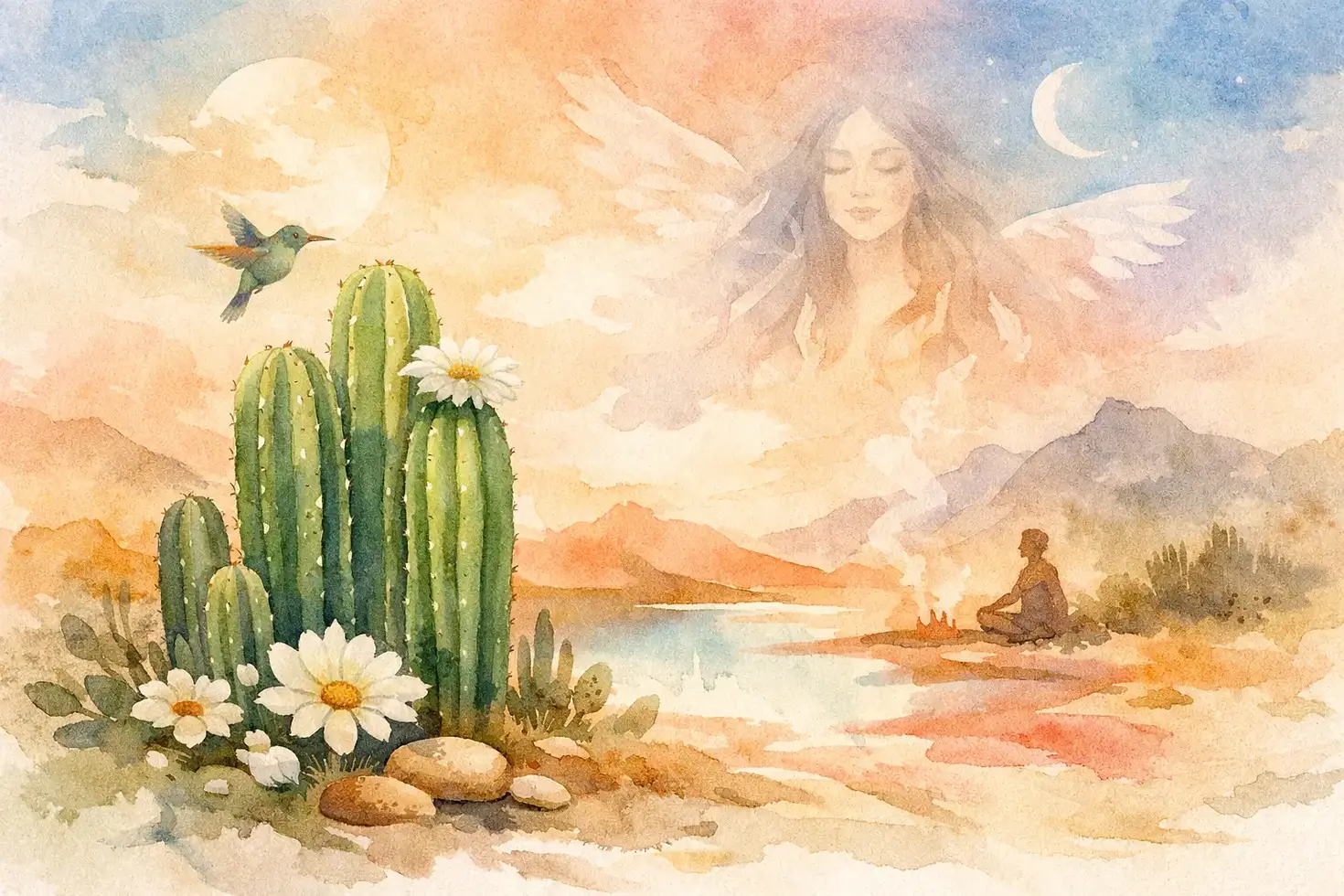
How to Prepare for San Pedro With Sacred Care
- 19 hours ago
- 5 min read
A San Pedro ceremony begins long before you sit before the altar. It begins in the choices you make when no one is watching: the conversations you are willing to have with yourself, the care you bring to your body, and the honesty you offer your facilitators. This is how to prepare for San Pedro in a way that honors both the sacredness of the medicine and the real human being you are bringing into ceremony.
San Pedro, often held within Andean traditions as a teacher of the heart and a companion to the natural world, is not a shortcut around grief, uncertainty, or the work of becoming whole. A well-held ceremony can open meaningful insight, emotional release, and a renewed sense of connection. Yet the depth of the experience is shaped by preparation, the quality of the ceremonial container, and the integration that follows.
Begin With Discernment, Not Desire Alone
The call to ceremony can feel profound, especially during a life transition, a season of loss, or a period of spiritual disconnection. Still, a sincere longing for healing is only one part of readiness. Ask yourself whether you have the time, stability, and support to meet whatever may arise afterward.
Preparation is also about choosing the right container. Seek a retreat or facilitator who conducts a thorough intake, communicates clearly about expectations, respects consent and personal boundaries, and provides integration support. A ceremonial leader should not promise a cure, pressure you into participation, or treat difficult emotional material as a spiritual failure. Sacred work requires humility, accountability, and trauma-conscious care.
Legal status varies by location, and participants are responsible for understanding the laws where a ceremony is offered and where they live. Responsible facilitators will be transparent about their setting, screening process, emergency planning, and the lineage or practice that informs their work.
How to Prepare for San Pedro Physically and Medically
Your body is not separate from your spiritual path. Before making any commitment, complete all health screening forms honestly and speak directly with qualified medical and mental health professionals when appropriate. Do not stop, start, or change prescription medications simply to attend a ceremony without guidance from the clinician who prescribes them.
San Pedro contains mescaline and can interact with certain medications and health conditions. It may be unsuitable for people with particular cardiovascular concerns, seizure conditions, psychotic disorders, bipolar-spectrum conditions involving mania, pregnancy, breastfeeding, or other circumstances that require individualized assessment. A personal or family history of serious psychiatric instability also deserves careful, professional consideration. If a retreat does not ask about your medical history, medications, and mental health, consider that a serious concern.
In the days leading up to ceremony, simplify rather than punish yourself. Eat nourishing, familiar foods, drink adequate water, and prioritize sleep. Many ceremonial traditions invite participants to reduce or avoid alcohol, recreational drugs, and highly stimulating substances beforehand. Your facilitator may provide a specific dietary protocol. Follow it carefully, particularly when it relates to safety, but avoid turning preparation into a test of purity. The purpose is to arrive clear, rested, and available - not depleted or ashamed.
It can also help to reduce unnecessary demands on your schedule. If possible, avoid placing a major work deadline, a demanding social event, or immediate travel directly after the ceremony. Give your nervous system room to settle.
Prepare Your Inner Landscape
An intention is not a demand that the medicine deliver a particular outcome. It is a truthful orientation. Rather than asking, “Will I have a breakthrough?” consider asking, “What am I ready to meet with greater honesty, courage, and compassion?”
Write for a few quiet minutes each day before your retreat. You might reflect on a relationship that needs attention, a recurring pattern, a grief you have postponed, or the kind of life you are trying to build. Notice where you are seeking certainty. Notice, too, what is already asking for your gratitude.
Keep the intention spacious. “Help me listen to my heart” can be more useful than trying to force an answer about a career, relationship, or identity. Ceremony may bring clarity, but it may also bring questions that need time, support, and ordinary life to reveal their meaning.
If you have a trauma history, prepare a grounding plan before you travel. Identify what helps you return to the present: feeling your feet on the floor, placing a hand over your heart, naming objects in the room, stepping outside for fresh air, or asking for support. Let facilitators know what respectful care looks like for you. You have the right to ask questions, decline touch, request space, and communicate your limits.
Know What to Bring and What to Leave Behind
A retreat team will provide a packing list, and that list should guide your choices. In general, bring comfortable layers, a refillable water bottle, simple toiletries, any approved medications in their original containers, a journal, and clothing suitable for changing weather or time outdoors. Consider bringing a meaningful but uncomplicated object for the altar if that is welcomed in the ceremonial space.
Leave behind the expectation that you must perform spirituality correctly. You do not need to be the most experienced person in the room, the most expressive, or the most composed. Comparison can pull attention away from your own process. San Pedro ceremonies may be tender, physically demanding, beautiful, confusing, quiet, or emotionally intense. There is no single experience that proves the ceremony was valuable.
It is wise to avoid making major life decisions in the emotional immediacy of a ceremony. An insight may be true and significant, but wisdom includes allowing it to settle. Give important decisions time to be tested through sleep, conversation, and the reality of your daily responsibilities.
Enter Ceremony With Consent and Reverence
Before the ceremony begins, understand the practical agreements. Ask how facilitators handle medical concerns, emotional overwhelm, bathroom needs, and requests for support. Know whether there will be music, silence, prayer, movement, or time outdoors. Clarify boundaries around touch, photography, confidentiality, and leaving the ceremonial area.
During the experience, return to simple anchors when intensity rises. Breathe slowly. Feel the ground beneath you. Sip water if it is offered and appropriate. Tell a facilitator if you feel physically unsafe, panicked, disoriented, or unable to regulate. Asking for help is not an interruption of the work. It is part of honoring the work.
Reverence does not mean surrendering your discernment. A sacred container invites devotion and personal agency together. You remain the keeper of your body, your boundaries, and your choices.
Make Integration Part of the Commitment
The ceremony is a threshold, not the destination. What matters afterward is how you carry its teachings into your relationships, habits, and service to the world. Protect the first few days after returning home when you can. Rest, eat gently, spend time in nature, limit overstimulation, and write down what feels alive before the details fade.
Share carefully. Not everyone in your life will understand ceremonial work, and not every insight needs immediate interpretation. Choose one or two trusted people, an integration counselor, or a grounded spiritual community where you can speak without being rushed toward a conclusion.
Then look for one small act that gives the experience a life beyond memory. It may be an honest conversation, a boundary you finally keep, a daily prayer, a walk at sunrise, or a commitment to continued therapy or coaching. At Pachamama Sacred Paths, integration is honored as an ongoing relationship with what ceremony reveals, not a final step on a retreat schedule.
Approach San Pedro with a prepared body, a humble heart, and enough spaciousness to let the teachings unfold in their own time. The most enduring medicine is often found in the devoted choices you make when you return home.


Comments