


How to Choose an Ayahuasca Facilitator Safely
A ceremony can be held in a beautiful place, wrapped in sacred language, and still fail to provide the care a vulnerable person needs. When you are considering ayahuasca, the question is not simply where you will go or how powerful the experience may be. It is whether the people holding the space have the maturity, preparation, and ethical discipline to care for human beings in altered states.
Learning how to choose an ayahuasca facilitator is an act of self-respect. It asks you to slow down before making an emotional or financial commitment, listen beneath polished promises, and discern whether a ceremonial container is truly built for safety, reverence, and long-term healing.
How to Choose an Ayahuasca Facilitator With Discernment
A trustworthy facilitator does not ask you to surrender your discernment at the door. They welcome thoughtful questions. They understand that trust is earned through clarity, consistency, and responsible action, not through spiritual titles, dramatic stories, or claims of exceptional power.
Begin by looking at the whole container rather than one charismatic individual. Ayahuasca work requires more than the ability to lead songs or speak beautifully about spirit. It involves preparation, medical and psychological screening, consent practices, emotional attunement, practical emergency planning, sober support during ceremony, and skilled integration afterward.
Ask who will be present in the room and what each person’s role will be. A retreat may have a lead ceremonial guide, assistants, medical support, integration practitioners, and a coordinator. Know the participant-to-staff ratio, whether facilitators remain alert all night, and who responds if someone becomes physically ill, panicked, disoriented, or needs to leave the ceremonial space.
A responsible organization can explain these matters plainly. Vague answers such as “the medicine takes care of everything” should give you pause. Sacred trust and practical safeguards belong together.
Look for Lineage, Humility, and Cultural Respect
Lineage matters, but it should never be reduced to a marketing badge. Ask where the facilitator’s teachings come from, who trained them, how long they have served in ceremonial settings, and how they remain accountable to elders, teachers, or an ethical community.
Authentic relationship to a tradition often carries humility. A grounded facilitator is able to name what they know, what they do not know, and where their work fits within a larger living tradition. They do not present themselves as the sole source of truth or imply that participants must become dependent on them to remain spiritually protected.
For seekers drawn to Indigenous and Earth-honoring traditions, cultural respect is especially important. Listen for whether the retreat honors the people, cosmology, and communities connected to its practices, rather than borrowing sacred symbols for atmosphere. This does not require perfection or a single cultural background. It requires devotion, reciprocity, transparency, and a willingness to learn.
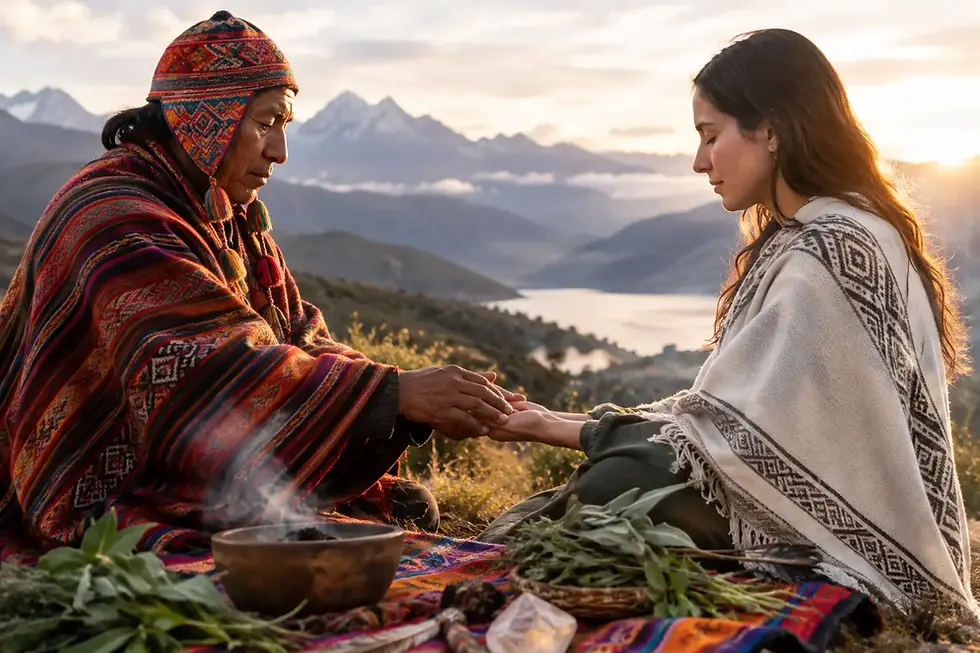
In an Andean-informed path, ceremony is often understood as relationship: relationship with Pachamama, spirit, community, ancestors, and one’s own responsibility. The most meaningful facilitators make room for this relationship without using it to control participants or override their boundaries.
Treat Health Screening as Sacred Care
Ayahuasca can involve serious physical and psychological risks, particularly when combined with certain medications, substances, or health conditions. A facilitator should have a thorough, confidential intake process well before you arrive. A simple form asking whether you have “any health issues” is not enough.
Appropriate screening commonly addresses current medications and supplements, heart conditions, seizure history, psychiatric history, substance use, pregnancy, sleep concerns, recent major trauma, and prior experiences with altered states. The purpose is not to judge or exclude people casually. It is to identify whether participation is appropriate now and what additional support may be needed.
Be especially cautious if a retreat tells you to stop prescription medication on your own. Medication changes must be discussed with the prescribing clinician or another qualified medical professional who understands your health history. Do not taper, discontinue, or alter medications to attend a ceremony simply because a facilitator suggests it.
A good program may determine that ayahuasca is not appropriate for you at this time. While this can feel disappointing, it can also be a sign of integrity. Spiritual longing does not erase medical realities, and a wise guide will not turn every applicant into a participant.
Ask About Consent and Boundaries Before You Book
During ceremony, people may be emotionally open, physically unsteady, and deeply suggestible. That is why clear consent practices are not optional. Ask directly how the team handles touch, personal space, nudity, assistance to the restroom, and any form of bodywork or energetic healing.
You should know in advance whether touch is ever offered, how consent is requested, and how you can decline without explanation. “Healing touch” is not a blanket permission. Consent should be specific, ongoing, and freely given, especially when someone is in an altered state.
Also ask how facilitators handle romantic or sexual boundaries. There should be no ambiguity. A practitioner who initiates sexualized contact, frames attraction as a spiritual teaching, or suggests that intimacy is necessary for healing has crossed an ethical line. Power differences in ceremonial settings are real, and responsible leadership protects participants from exploitation.
Clear boundaries extend to confidentiality as well. Find out whether sharing circles are voluntary, how personal information is protected, and whether photographs, recordings, or testimonials are ever taken. Your healing story belongs to you.
Notice Whether Safety Plans Are Real, Not Performative
No ceremony can promise a particular outcome. Deep experiences can bring grief, fear, confusion, bliss, insight, or memories that need careful support. A capable facilitator does not minimize difficult experiences or call every distressing moment an “ego death” that must be endured without help.
Ask what happens if a participant has a medical emergency, becomes psychologically overwhelmed, wants to stop participating, or needs outside care. The retreat should have a practical plan appropriate to its location, including access to transportation, emergency contacts, and staff who know how to respond calmly.
The setting itself matters. Consider sleeping arrangements, sanitation, food, accessibility, travel logistics, and the degree of privacy available. If the retreat is remote, ask how communication and transportation are managed. If you are traveling internationally, understand the local legal context and do not assume that a spiritual framing changes applicable laws.
It also helps to ask how many ceremonies are scheduled and why. More ceremonies do not automatically mean more healing. For some people, spaciousness between experiences supports reflection and regulation. For others, a shorter format may be more appropriate. The right pace depends on your health, experience, intentions, and capacity to integrate.
Choose Integration Over Intensity
The ceremony is not the finish line. A powerful night can be meaningful, but transformation takes shape in ordinary life: in how you speak to your family, care for your body, meet grief, change patterns, and honor the commitments that arise.
Before choosing a retreat, ask what preparation is offered. This may include intention-setting, dietary guidance, education about the process, counseling referrals, group calls, or conversations about realistic expectations. Preparation should help you arrive informed rather than frightened or idealizing the experience.
Then ask what happens after you return home. Thoughtful integration support may include one-on-one sessions, facilitated circles, educational resources, coaching, peer community, or referrals to licensed mental health care when appropriate. Integration support is not a substitute for therapy, medical care, or crisis services, but it can help you translate ceremony into grounded practice.
Be wary of programs that create urgency by insisting that you must attend immediately or that your healing can happen only through their next retreat. A sacred path has room for timing, reflection, and informed choice. The facilitator who respects your “not yet” is often more trustworthy than the one who pressures you toward a deposit.
Let Your Body Have a Voice
Research the retreat carefully, read policies, ask for a call, and speak with former participants when possible. Yet discernment is not only intellectual. Notice what happens in your body when you receive answers. Do you feel met with steadiness and respect, or do you feel rushed, confused, flattered, or afraid to ask another question?
A trustworthy ayahuasca facilitator will not promise to heal every wound, reveal your destiny, or replace your own inner authority. They will invite preparation, honor your boundaries, and hold ceremony with reverence for both mystery and responsibility.
The right container may not be the loudest one. It may be the place where you feel safe enough to remain honest, supported enough to meet what arises, and free enough to carry your own medicine home with humility and care.


Comments