


Your Guide to Spiritual Pilgrimage Planning
A guide to spiritual pilgrimage planning begins where your excuses end. You are not planning a pleasant escape. You are answering a call that has likely pressed on you for a long time: the sense that your life looks full from the outside while something within remains hungry, split, or asleep.
A pilgrimage is not a vacation with incense, mountains, and ceremony added to it. It is a decision to leave the familiar ground so you can meet the truth you have avoided. The land does not need your performance. The mountains do not need your story. Spirit asks one thing from you: honesty.
What shall it profit a man if he gains the whole world and loses his soul? This question is not poetry. It is a line in the sand. If you feel torn between the life you built and the life your spirit demands, stop calling that tension confusion. It is a summons.
What a Spiritual Pilgrimage Is Really For
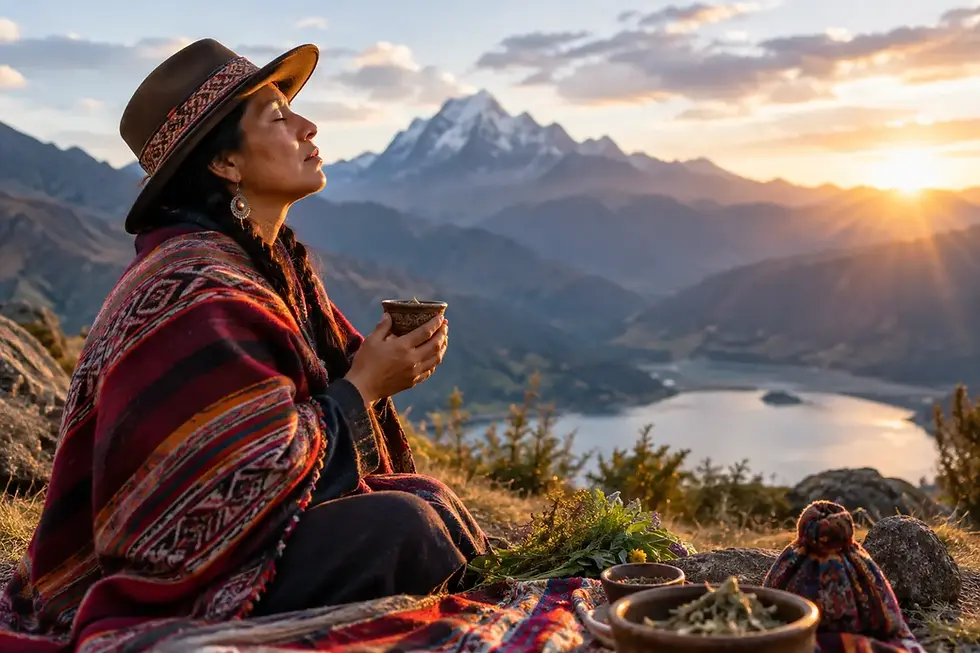
In the Andean path, pilgrimage is movement with purpose. You move through the outer world because your inner world has become crowded. Old grief, family patterns, broken promises, fear, rage, and false identities create noise. A true pilgrimage brings you before places, prayers, teachers, and ceremonial fires that do not negotiate with that noise.
The goal is not to collect a powerful story. It is not to return home sounding mysterious. It is to come into right relationship with Pachamama, the Apus, your ancestors, your body, your word, and the life you have been given.
Andean cosmology teaches reciprocity, known as ayni. Nothing stands alone. Every choice carries a return. When you take without gratitude, when you ask for guidance while refusing discipline, when you seek healing while feeding the wound with the same old actions, you create imbalance. Pilgrimage calls that imbalance into view.
This is why the path can feel intense before you even depart. Part of you wants freedom. Another part wants to keep every familiar chain. No man can serve two masters. You cannot walk toward transformation while protecting the habits that keep you small.
The First Question in Spiritual Pilgrimage Planning
Before location, dates, or ceremonies, there is a harder question: What are you willing to leave behind?
Not luggage. Not work emails. Not your usual food or comforts. What identity are you ready to surrender? The rescuer who is exhausted from saving everyone? The successful person who cannot sit quietly with grief? The spiritual seeker who knows many teachings but refuses to obey one? The wounded child who has been allowed to rule every adult choice?
A pilgrimage exposes the gap between what you say you want and what you are devoted to. That is mercy. You cannot change what you keep hidden.
God does not change the condition of a people until they change what is within themselves. Your outer life follows your inner altar. If fear sits on that altar, fear will lead. If approval sits there, other people will lead. If truth sits there, your path will begin to clear.
The right path has become clear from the wrong. Yet clarity asks for a price. Once you see what is false, you are responsible for your next step. This is why a pilgrimage should be approached with reverence and resolve, not as a quick answer to pain.
The Difference Between Travel and Devotion
Travel gives you new scenery. Devotion gives your life a new direction.
You can visit Peru, Bolivia, Mexico, or California and remain unchanged. You can stand before a mountain and still worship your fear. The place is not the work. The ceremonies are not the work. The real work is the agreement you make with Spirit when no one is watching.
A devoted pilgrim does not demand comfort from every moment. They listen for what is being revealed. They understand that a difficult truth can be a greater gift than a pleasant experience. He that finds his life shall lose it. The version of you built only for survival cannot lead you into ascension.
Choose a Path With Lineage and Order
Not every gathering that uses plant medicine, prayer, drums, or spiritual language holds real depth. Some spaces feed curiosity. Some feed ego. Some offer a moment of release but no path for carrying that release into daily life.
A real ceremonial container has order. It honors lineage, clear leadership, prayer, boundaries, preparation, and integration. It does not turn ancient practices into entertainment. It does not flatter every desire. It asks you to show up with respect for the medicine, the land, the facilitators, and the community walking beside you.
For those called to Andean work, the Q’ero teachings offer more than beautiful symbols. They offer a way of seeing. The Apus are living mountain spirits. Pachamama is not a backdrop for your personal breakthrough. Reciprocity is not a slogan. It is a law of relationship.
This matters when your pilgrimage includes ceremonies with Ayahuasca, San Pedro, Cacao, Kambo, Hapé, Sananga, Peyote, or Bufo. These are not objects for chasing visions. They are ceremonial allies approached through humility, prayer, and accountability. The question is not, “What experience can I get?” The question is, “What am I prepared to answer for when truth reaches me?”
If thy right eye offend thee, pluck it out. This is blunt because the path is blunt. If something keeps leading you away from your soul, stop making it comfortable. Stop naming it your personality. Stop calling it timing.
Your Guide to Spiritual Pilgrimage Planning Begins With a Vow
The strongest plan is not built from a checklist. It is built from a vow. A vow gives your journey a center when emotions rise, old fears return, or the mind begins bargaining for an easier road.
Your vow may concern grief, lineage wounds, purpose, forgiveness, service, or devotion. It may be the moment you stop running from the call to become who you were made to be. It must be true enough to challenge you. A weak intention asks for relief. A real vow asks for transformation.
Man has only that for which he strives. You do not receive a new life because you admired the idea of one. You receive what you are willing to serve with your time, choices, humility, and discipline.
This is also why the return home matters. Pilgrimage is not complete when the fire goes out or the plane lands. The message you receive must enter your speech, your relationships, your work, your boundaries, and your daily offerings. Otherwise, you turn revelation into another memory.
The Community Around the Fire Matters
No one walks a serious path alone forever. Isolation often disguises itself as independence, yet it keeps many seekers trapped in the same inner maze. A right community gives witness to your word. It reminds you of your vow when your old life tries to reclaim you.
Choose companions who honor truth over drama. Choose guides who do not make you dependent on them. Choose a path that continues after the ceremonial nights, with counsel, integration, prayer, and disciplined support.
You yourselves must strive; the awakened ones only point the way. A guide can point. A mountain can teach. A ceremony can reveal. But no one can live your devotion for you.
Let the Call Become a Decision
If you are reading this while carrying chaos you can no longer explain away, do not wait until your life breaks louder. The call does not become less real because you delay it. It simply waits while the cost of avoidance grows.
Heedfulness is the path to the deathless; heedlessness is the path to death. Give attention to the part of you that knows you were made for more than surviving your calendar, pleasing your circle, and repeating old pain.
A true pilgrimage asks for your whole presence. It also gives you a place to remember what your soul has known beneath the noise. If you are ready to meet that call with discipline, prayer, and an open heart, reach out and begin the conversation. Your path is waiting for your decision.


Comments