


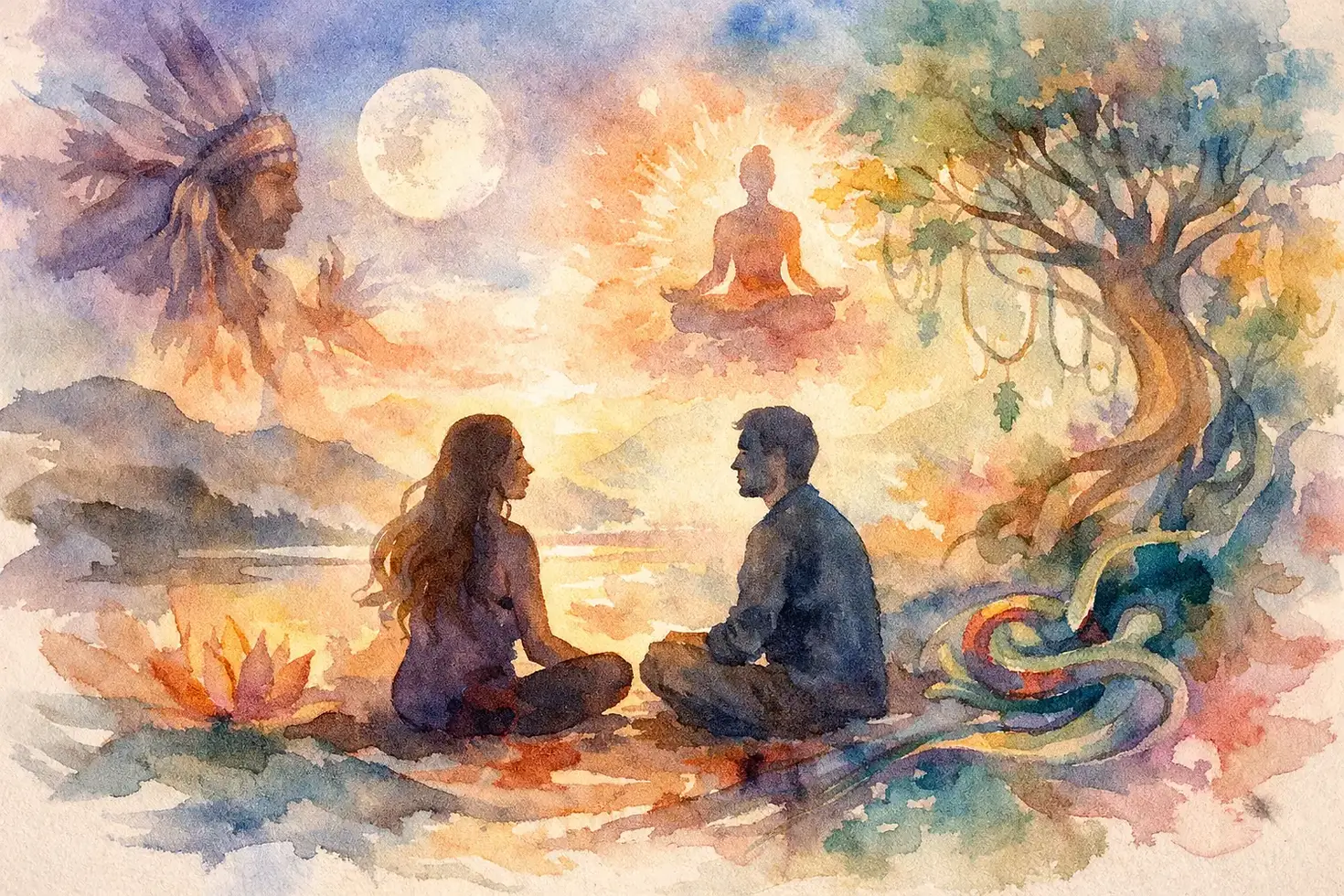
Spiritual Coaching After Ayahuasca
The ceremony may be over, yet the real work often begins when you return home to your inbox, your relationships, your habits, and the parts of yourself that did not vanish in one night of revelation. Spiritual coaching after ayahuasca exists for this threshold. It helps you meet what was opened in ceremony with reverence, structure, and discernment, so the experience can become lived wisdom rather than a beautiful memory you cannot quite hold.
Ayahuasca can bring clarity, grief, forgiveness, ancestral material, bodily release, or a direct encounter with the sacred. It can also bring confusion. Some people leave ceremony feeling luminous and certain. Others feel tender, disoriented, emotionally raw, or unsure what was insight and what still needs patient unfolding. Both are normal. A powerful experience does not automatically translate into a transformed life.
Why spiritual coaching after ayahuasca matters
Plant medicine can open the field, but integration is what teaches the nervous system, the mind, and the heart how to live inside that opening. Without support, people often swing between extremes. They may idealize every vision as literal truth, or dismiss the entire experience because daily life feels unchanged a week later. Neither response honors the medicine well.
Spiritual coaching after ayahuasca offers a middle path. It creates a grounded container where symbolism can be explored without inflation, emotions can be felt without becoming overwhelming, and insights can be translated into practical choices. This is not about someone telling you what your ceremony meant. It is about being accompanied by a skilled guide who can help you listen more deeply, stay honest, and move with sacred responsibility.
For many seekers, the most meaningful fruits of ceremony are not dramatic. They show up as slower speech, clearer boundaries, less self-betrayal, renewed prayer, healthier relationships, or the courage to stop abandoning one’s path. These changes require attention over time. They ask for devotion, not just intensity.
What a good coach is actually helping you do
A mature spiritual coach is not there to impress you with mystical language or claim authority over your soul. They are there to help you integrate revelation into reality. In the best cases, that support includes spiritual discernment, trauma awareness, accountability, and respect for the sacred intelligence of the medicine traditions themselves.
Some sessions may focus on making sense of dreams, visions, body sensations, or recurring themes that surfaced in ceremony. Others may become very practical. You may need help setting boundaries after realizing a relationship is draining your life force. You may need support creating new daily practices so your insight does not evaporate under the pressure of work and family obligations. You may need someone to help you slow down before making sudden decisions in the name of spiritual truth.
That last point matters. After ayahuasca, people sometimes feel called to quit jobs, end marriages, move across the country, or devote themselves to service. Sometimes those impulses are deeply aligned. Sometimes they arise from a genuine awakening that still needs grounding before action. A wise coach helps you discern timing, readiness, and consequence. Revelation is sacred. So is pacing.
What spiritual coaching after ayahuasca can include
The exact shape of coaching depends on the person, the ceremony, and the season of life. One individual may need support with grief and nervous system stabilization. Another may be integrating a spiritual calling that has been ignored for years. Another may be confronting childhood trauma that surfaced through symbols, memory, or intense somatic release.
In a well-held process, coaching can include reflection on ceremony themes, meditation or prayer guidance, journaling prompts, values clarification, shadow work, relationship inventory, and simple behavioral commitments that keep the integration alive. For some, it also includes spiritual education - helping them understand that an initiation is not the same as instant mastery, and that humility is one of the surest signs of real growth.
This is where lineage and integrity matter. Traditions rooted in Andean wisdom, for example, understand healing as relational. You are not healing as an isolated self trying to optimize your personal story. You are restoring right relationship with spirit, with the Earth, with your ancestors, with your community, and with your own inner truth. Coaching that honors this broader view often feels different from mainstream self-help. It is less about performance and more about alignment.
The difference between integration and dependence
There is a healthy concern many experienced seekers carry: if coaching becomes too central, does it weaken inner trust? It can, if the relationship is poorly held. A good guide does not create dependency. They strengthen your capacity to listen, choose, and walk with clarity.
This is one of the trade-offs worth naming openly. Some people need a few sessions after ceremony and then integrate well on their own through prayer, journaling, bodywork, and community. Others benefit from a longer season of support, especially if the medicine brought up trauma, spiritual crisis, or major life transitions. There is no single correct timeline. It depends on your history, your support system, your emotional regulation, and the depth of what surfaced.
The goal is not endless processing. The goal is embodiment. Over time, coaching should help you become less fragmented, less reactive, and more able to carry your own spiritual authority with humility.
Signs you may need more support after ceremony
Not every difficult post-ceremony experience is a problem, but some do call for skilled care. If you feel persistently ungrounded, overwhelmed by emotion, confused by what happened, activated by trauma material, or unable to function well in daily life, more support may be wise. The same is true if you are idealizing the ceremony and chasing another one before integrating the first.
Sometimes the need is quieter. You may not be in crisis at all. You may simply sense that something sacred was entrusted to you, and you do not want to lose it. That too is a worthy reason to seek spiritual coaching after ayahuasca. Support is not only for breakdown. It is also for stewardship.
At Pachamama Sacred Paths, this kind of care is understood as part of the path itself, not an optional extra. Ceremony opens the door. Ongoing spiritual accompaniment helps you walk through it with integrity.
How to choose the right spiritual coach
The right coach will not only understand altered states. They will understand what happens when mystical insight meets ordinary life. Ask yourself whether this person feels grounded, ethically clear, and spiritually mature. Do they honor your agency? Do they respect the cultural and ceremonial context of the medicine? Can they hold both mystery and practicality without collapsing into dogma or vagueness?
It also helps to look for trauma-conscious support. Not every intense ceremony experience is trauma, but unresolved trauma can absolutely shape what emerges afterward. A coach does not need to replace a licensed therapist, yet they should know the limits of their role and recognize when additional mental health support is appropriate. Serious spiritual work requires humility around scope.
Listen to the texture of their guidance. Do they rush to interpret every symbol for you? Do they make grand claims about destiny? Do they encourage impulsive decisions? These are caution signs. The best guides are steady. They ask thoughtful questions. They help you return to your body, your values, your prayer, and your direct knowing.
What integration looks like months later
People often expect integration to feel dramatic. More often, it feels quiet. Months after ceremony, you may notice that you no longer betray your intuition so quickly. You may find yourself less drawn to chaos, more honest in love, more disciplined in practice, or more willing to grieve what was never yours to carry. This is how medicine continues to teach.
There may also be cycles. A ceremony that made sense at first can reveal deeper layers later. An image, song, purge, or prayer may return with new meaning after three months or a year. Good coaching leaves room for that living relationship. It does not force closure before the soul is ready.
The deepest measure of integration is not whether you can describe your journey in compelling words. It is whether your life becomes more truthful, more compassionate, and more devoted to what is real. That can look tender rather than spectacular.
If ayahuasca has opened a door in you, let your next step be gentle and sincere. The sacred rarely asks for speed. More often, it asks for honesty, rhythm, and the courage to keep listening after the visions fade.


Comments